 Sex is probably the most powerful driving force in nature, in arts, implicitly in music. Some people believe that the power behind The White Stripes was the (sexual) tension between Jack and Meg White. When this flame faded out, Jack White moved over, eventually Jack find Alison Mosshart and we’ve got The Dead Weather.
The roots of “Blunderbuss” Jack’s first official solo album goes back several years when White was recording songs for several artists such as Tom Jones, Insane Clown Posse, etc. White was in contact with Wu-Tang Clan member RZA and they were going to do a recording session, but RZA couldn’t attend the session, so White recorded several tracks, which would ended-up into “Blunderbuss”. We’ve got 13 tracks, Jack delivering from raw blues to garage Indie Rock all the tricks and approaches he tried out in the last 15 years. Still, Jack managed to be timeless and fresh, shiny. This music is both simple and flawless! Read more Jack White – Blunderbuss (2012)

Environments – 2 (2012) – free download
 Ambiental experiment, both strange and intimate, have the exotic smell of a country-side field-recording re-shaped with post-industrial, urban noises. When Alex “Para” Ghita decide to involve more noisier with his drums in the flowing build-up of the tracks, its reminds me of Sigur Rós, although I admit it, I have no serious references in this field of experimental music.
Environments is a Bucharest (Romania) based experimental ensemble build around Stefan Panea’s compositions involving with help from Alex “Para” Ghita on the drums and Marius Costache on effects and noise shaping. The project is already on its second release, starts with the forth track, exactly from where the first release left off in 2011. Read more Environments – 2 (2012) – free download
Vagiant – Gospel According To Vagiant (2011)
 Vagiant is a five-piece union of antisocial, paranoid still life loving, good-mannered and joyful nerds. That’s what they think about themselves, I think they need urgent medical care, lots of colorful pills, eventually biscuit cases. This is totally madness on loose. No genre attached, this is a quite contorted, experimental, glowing and flowing (post) Rock journey through different sounds and styles, from quiet, warmer moments to energy full, nervous breakdown-like explosions. In an extensively patterned and predictable, standardized world, Vagiant brings chaos and disorder, bring a fresh breath of music.
And what’s even better, you can grab for free (name your price) this 5 track release from their Bandcamp page. Read more Vagiant – Gospel According To Vagiant (2011)
Not Your Fault [Mad About U RMX] – AWOLNATION remix contest
 When I had listen for the very first time this track, the first thought of mine was The Stranglers. Then the chorus kicked in and it was like Green Day raging. What a challenge!
AWOLNATION, is an American indie pop band, formed and fronted by Aaron Bruno, formerly of Under the Influence of Giants, Hometown Hero and Insurgence. The band is signed to Red Bull Records and now the label push them hard as hell. Part of the promotion of their album “Megalithic Symphony” released last year in March is this Indaba remix contest.
I wasn’t sure about this till the last minute and I put this mix together in the last few hours, kept the original drum track, but filtered through EQ because I felt like the highs were pretty messy and even distorted, and I did some radical vocal editing and vocoding. The result is somewhere between The Kraftwerk, The Damned and… very twisted Skrillex on highly dangerous dopes… 😆 Read more Not Your Fault [Mad About U RMX] – AWOLNATION remix contest
Masked Toys – Bipolar Disorder preview
 Some authentic Thrash which reminds me mainly of Exodus and Tankard and the good-old-days of the late 80’s, beginning of the 90’s. We’ve got three pretty raw recordings, but it definitively goes with the style. Luci – Voice & Madness, Bogdan – Guitars & Ideas, Sorin -Bass & Other strings, Ursu – Drums & Techs and set-up get back together last year determined to kick it hard again after a 16 years hiatus.
Originally formed in autumn of 1993, by Sorin (bass and vocals) and Bogdan (guitars), both freshmen at Iasi University, the kine-up was completed with Debo on drums, Cip on bass, while Sorin has concentrated exclusively on the the lead singer duties. After finalizing several songs, the band had gigs at “Rock Gala” in Bacau, “Young Rock for Youngs” in Piatra Neamt, where they were awarded the “Best Newcomer” prize, along with other regional shows. In February 1995 they recorded the demo “Greatest sHits” whose exciting originality blew up the underground scene. After an impressive participation at “Top-T Buzau”, Sorin had to leave the country in 1996 and the band failed to compensate his absence while Bogdan and Debo joined the Romanian-American band Destroyer.
But real passion never dies, therefore, in 2011, after Sorin had the chance to meet Luci (vocals) and Ursu (drums), the Masked Toys’ adventure began again. They quickly co-opted Bogdan again, and the band is back on track with full force. Taking by assault the stages again and working on the brand new set of songs, we’ve got a three track teaser of what’s coming up. Read more Masked Toys – Bipolar Disorder preview
Paradise Lost – Tragic Idol (2012)
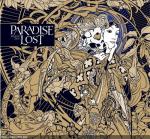 Hopefully this will be a “lucky 13” – although this is quite a dark and heavy one. Scheduled to be released on 23 April 2012, the upcoming 13th studio album by Paradise Lost is 101% classic Metal with strong roots back to Doom and Gothic and eventually since their 1991’s second album, “Gothic”, the band did not delivered something like this. Just like two decades ago the album was written by Nick Holmes and Gregor Mackintosh, drummer Matthew Archer left the band in 1994 and after several rotations, behind the drum kit since 2009 is Adrian Erlandsson, but although, the band seems totally unchanged. In a good sense. We know, the road back here was not so smooth and flawless as it might seem, but what’s matter it’s we are here now. Well, I’m aware, the journey might be much more significant then the final destination, but this is quite a different philosophical issue. So, I love “Tragic Idol” as it is, I loved it as I saw the cover for the first time. Read more Paradise Lost – Tragic Idol (2012)
With the Pieces – Lights Resolve Remix Contest
 If the music industry wouldn’t killed me with the dumping and overdose of mediocre products last year, more aggressively then ever, “Feel You’re Different”, the debut album of this NY based trio, definitively would made it to the list of my favorite albums of 2011. Unfortunately I didn’t have the chance last year to listen it, fortunately I have it now. Indaba and (probably) the band offered their track “With the Pieces” to be remixed. The first thing which stroked me was the excellent sound. Produced/engineered/mixed by Mike Sapone and mastered by Emily Lazar & Joe LaPorta, the track – and the album – sounds awesome! Intense and clean, groovy and cutting, really-really rocks! The song is also great, have some killer verses, pounding drums, a murderous bass-line and huge vocals. Honestly and… actually I did not felt like it need to be remixed at all. But! Read more With the Pieces – Lights Resolve Remix Contest
Demon Hunter – True Defiance (2012)
 Riding or not the fence of being Christians it’s still an issue to discuss for many, but the facts are facts, Demon Hunter sold over half a million albums, while their previous album, “The World Is a Thorn” debuted at No. 39 on the Billboard 200 with first-week sales of 14,000.
Honestly, the remix contest for their new song, “Someone To Hate” on Indaba was my very first collision with this new Metal band from Seattle, Washington, formed in 2000 by brothers Don Clark and Ryan Clark. My take on “Someone To Hate” merge classic string arrangement with Drum’N’Bass like synths and crushing Metal riffs, pounding drums, keeping the original spirit of the song alive and breathing. Worth to listen, deserves your VOTE. I guess. 🙂 Read more Demon Hunter – True Defiance (2012)
Neosis – Neosis (2012)
 Scientism is a belief in the universal applicability of the scientific method and approach, and the view that empirical science constitutes the most authoritative worldview or most valuable part of human learning to the exclusion of other viewpoints. The term frequently implies a critique of the more extreme expressions of logical positivism and has been used by social scientists such as Friedrich Hayek, philosophers of science such as Karl Popper, and philosophers such as Hilary Putnam to describe the dogmatic endorsement of scientific methodology and the reduction of all knowledge to only that which is measurable. Scientism may refer to science applied “in excess” and the term is often used in pejorative senses.
Neosis is an acronym which literally means New Evolution Of Society Influenced by Scientism. It’s a conceptualized vision of a futuristic society in which humanity is scientifically organized. A society within which scientific methods take the place of social sciences and humanities, going as far as becoming the substitute for philosophy in order to solve ethical or moral issues. In this civilization, science holds the key to all the ills that mankind suffers from, whether they are economical, political or social.
After several musical events linked to the international scene and media, Greg (guitars/samples/production), Did (bass/samples), Tom (vocals) and Anthony (drums) formed the band called Neosis. Read more Neosis – Neosis (2012)
Rufus Wainwright – Bitter Tears and… Glitter Fears
 Not a fan of Rufus, actually this remix contest is the first collision of mine with his music. Indaba Music and Rufus wanted a remix of “Bitter Tears”, one of the new songs featuring on the upcoming seventh studio album, “Out of the Game”, scheduled for release in the United Kingdom and Canada in April 2012 and in the United States in May 2012 through Decca Records/Polydor Records. I find the song interesting, but pretty dense and when I almost gave up on this one, I had a last moment inspiration and twist this song into my own. Well, while they stated that “put your personal spin on this captivating tune” this might actually work. I kept the things pretty simple and straight, knocked my self out having fun with some naughty delays and build-up a noisy, contorted kind of chorus, so this song is actually another song.
Please listen, have fun and VOTE if you really love what you’ll gonna hear. Read more Rufus Wainwright – Bitter Tears and… Glitter Fears