
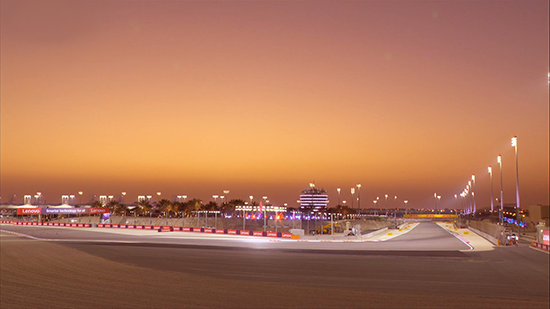
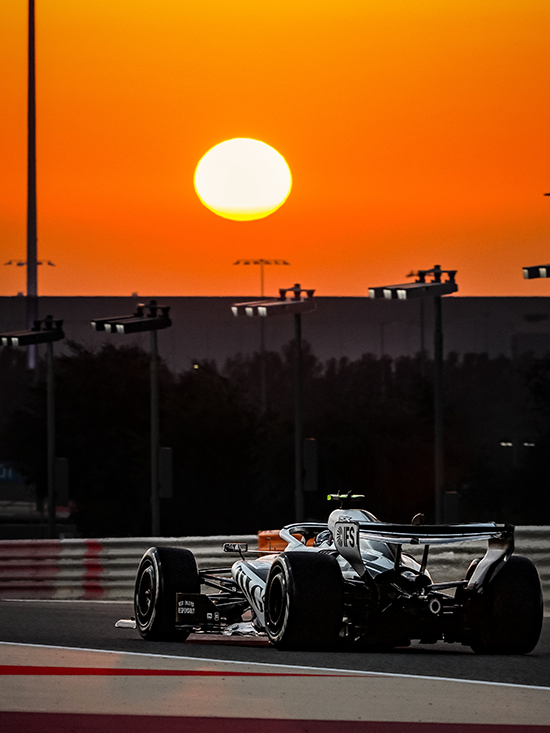
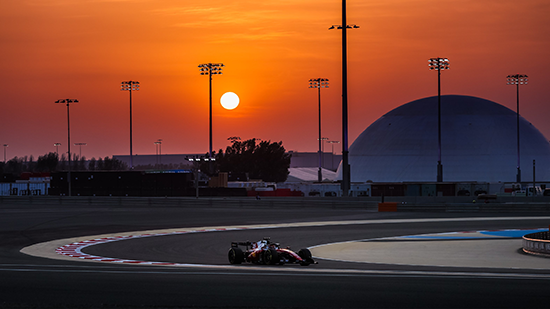
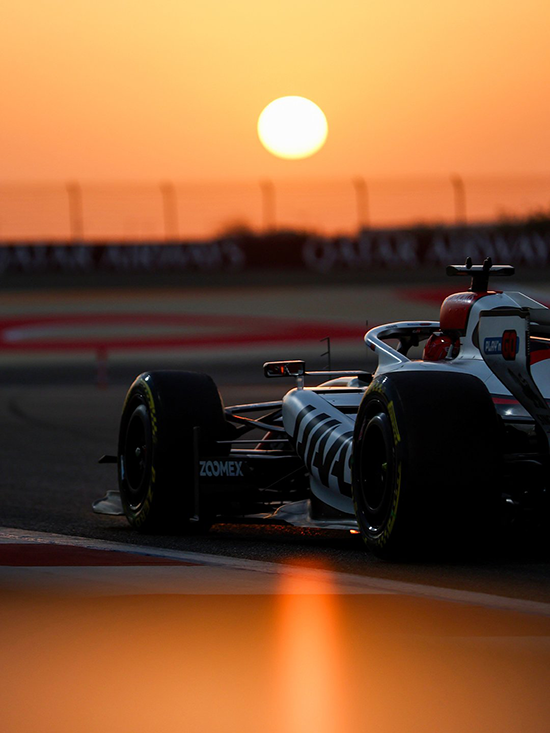
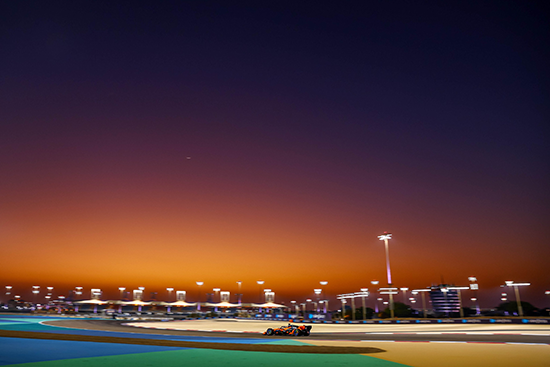
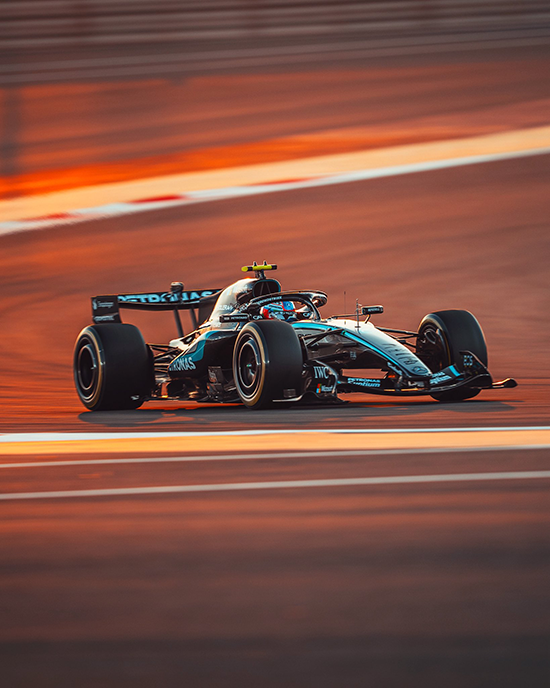
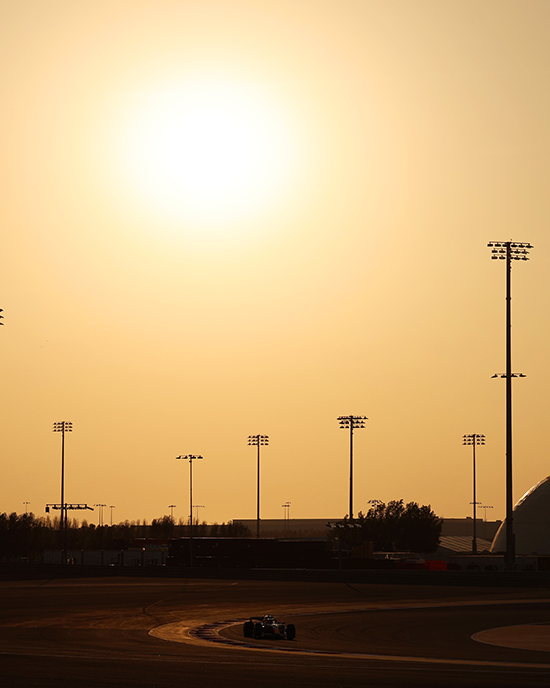
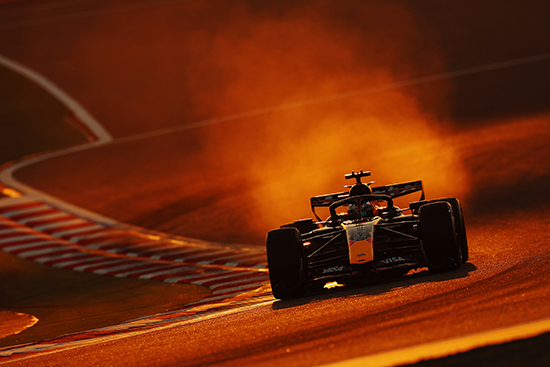
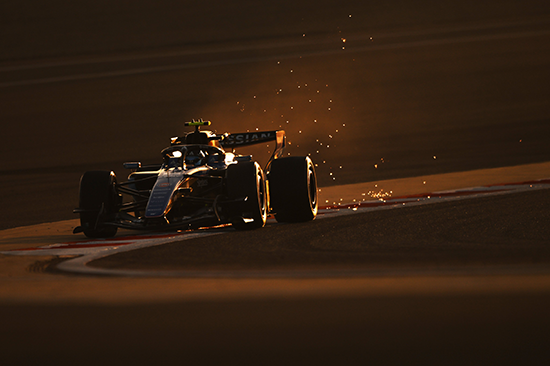
The sun has set behind the Bahrain circuit, and testing for the 2026 season has concluded.
Let’s hope the sun does not set on Formula One, too.
The Big Four, and I don’t refer to the Metallica, Slayer, Megadeth and Anthrax combo, but, obviously, to Mercedes, Red Bull, McLaren and Ferrari, seem to remain the main title contenders. Perhaps Mercedes has a little edge, but all four look strong, and they may all hold back something for the start of the season in Australia.
The Constructors’ title is on the table to grab for any of the four favourites, and I don’t really expect any surprises from the other teams.
More than knowing the winners, I would like to see thrilling races and unpredictable competition.
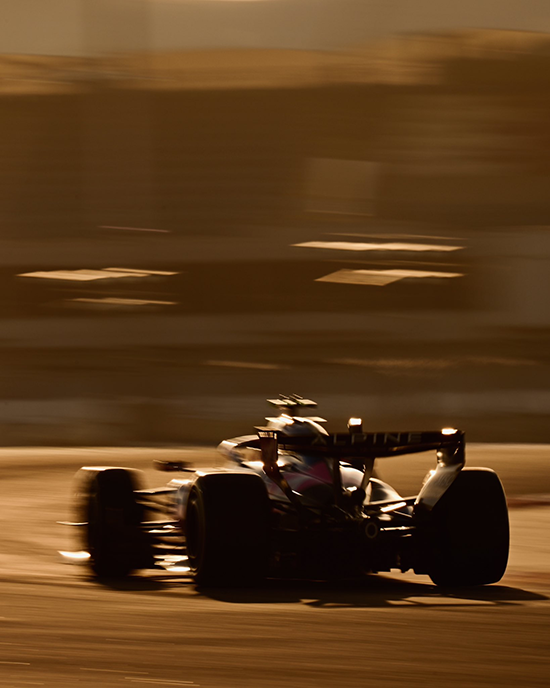
The midfield is tight and solid as well. Haas, Alpine, Racing Bulls and Williams are close and competitive. Audi did an excellent job, and they can also be in the midfield fight. Cadillac may have some catching up to do, but if the Ferrari engine proves to be reliable, the chassis can be improved.
The midfield battle will be intense. Car development and luck will also spice up the competition.
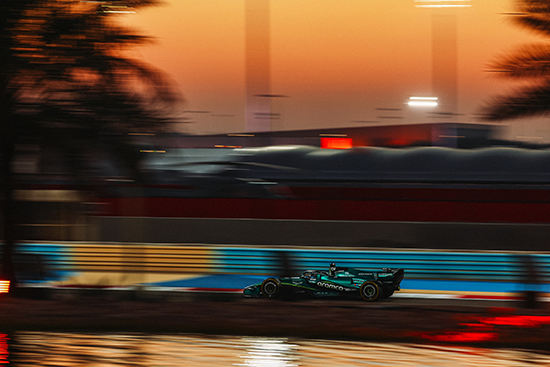
The bottom of the class for now is Aston Martin. Adrian Newey promised that the chassis would be at the top of the field by the seventh or eighth race. However, the Honda power unit may remain a much more troublesome issue to fix.
Honda returned to Formula One in 2015 with McLaren. They struggled with both reliability and performance issues until 2017, when McLaren switched to Renault engines, and Honda teamed up with Red Bull. However, success didn’t come until Max Verstappen won the World Championship in 2021, ironically, the year Honda decided to step away from Formula One once again. Aston Martin doesn’t have the luxury to wait 6 years for Honda to deliver. Nor their driver, the 44-year-old, two-time World Champion Fernando Alonso.
The quick fix? Hiring highly qualified personnel from Mercedes, Ferrari, and Red Bull, as Red Bull did by bringing people from Mercedes and Ferrari. It’s not exactly fair, but perfectly legal. Otherwise, we will see a more and more frustrated Mr Lawrence Stroll.
Max Verstappen, despite his public dislike of the new set of regulations and car, has the best shot at the Driver’s World Title.
Why? If the Red Bull car performs, his rookie teammate, Isak Hadjar, will not pose a serious title threat but will provide support, unlike in other top teams, such as McLaren, Ferrari, and even Mercedes, where the two drivers will constantly take points from each other. In this regard, Max has an advantage. The Red Bull team and the car are built around Max, and everybody is working for his benefit. It’s a luxury no other driver has.
I expect close competition between Lando Norris and Oscar Piastri, and George Russell and Kimi Antonelli. These drivers earn points for their teams but may ruin each other’s chances of winning the title.
I guess Charles Leclerc will have the edge over Lewis Hamilton. It has been four frustrating years for Hamilton, and it might be the last season for the seven (eight?) time World Champion. Leclerc is talented, diligent, younger, and has six years under his belt at Ferrari. He is their golden boy, and, beyond the commercial considerations, bringing Hamilton never made much sense. Ferrari needs a performing car, a champion contender driver, and a strong supporting driver. Neither Leclerc nor Hamilton is fit for a second driver role. I would love to see Hamilton re-surging, but I bet on Leclerc. 28 means that Leclerc is at his prime, while Hamilton, at 41, should level up his game considerably.
Sergio Perez and Valtteri Bottas are also on equal footing, but they might not have the car to battle at the top of the field in 2026. Most likely, it will be hard for them to get into the points.
Fernando Alonso will outperform Lance Stroll again. Likewise, Pierre Gasly will dominate Franco Colapinto, Oliver Berman will have the edge over Esteban Ocon, and Gabriel Bortoleto will prove a tough competitor for the much more experienced Nico Hulkemberg.
The elephant in the room is the new set of regulations. It seems that F1 took the wrong turn.
No sane F1 fan wants to hear about “lift-and-coast,” saving and managing fuel, tyres, battery, and the planet. The ‘Net-zero hoax’ ruined Formula One. These guys need fast cars, high-octane fuel, and durable tyres to race hard and unrestrained. As most drivers noted, we are getting further and further away from real racing.
The fix? Guys, bring back the V10s!
As we already have Formula E, we should restore Formula One to its original form and, in the name of technological development, eventually introduce a hybrid Formula based on current Formula One standards. That, perhaps, would make sense. At least for the manufacturers, but probably not for the public. Destroying Formula One is just another misadventure of deviant minds.
Quoting Max Verstappen: “There are a lot of good drivers (in Formula E) that would perform well here (in Formula One). But I don’t want us to be close to Formula E. I actually want us to stay away from that and be F1. So don’t increase the battery, actually get rid of that and focus on a nice engine!”
Hell yeah!
The other hot topic is a proposal to change how compression ratios are measured.
It would be unsporting to shut down the advantage a team has built for itself just because the others have missed a trick or opportunity.
It is common practice for teams working on a risky or innovative design to maintain dialogue with the FIA throughout the development process to ensure they remain on the right side of the regulations.
Mercedes previously did it this way while working on its Dual-Axis Steering (DAS) system for the 2020 season, reaping the rewards for 12 months before it was banned for 2021.
FIA was very positive throughout the development of Mercedes’ 2026 engine. However, four of the five power unit manufacturers, Red Bull, Ferrari, Audi and Honda, are unhappy with Mercedes’ innovation.
Mercedes explored a so-called “grey area” or “loophole” of the new regulation. Article C.5.4.3 states that, “No cylinder of the engine may have a geometric compression ratio higher than 16.0,” with an addendum has been made, outlining that the measurement procedure for the geometric compression ratio would be carried out at ambient temperature, ie. when the car has been parked up and the power unit has cooled down to the natural temperature of the external environment.
It seems Mercedes found a way to run the power unit at a higher compression ratio the rest of the time.
It is likely that a change to the way compression ratios are measured will be made in August, after 13 races of the new season.
The decision will affect primarily four Mercedes-powered teams: Mercedes, McLaren, Williams and Alpine. It may also become a title-deciding factor.
This episode is another example of how much F1 is about politics rather than sport.
Bahrain, second pre-season test in numbers.
Total laps/km by team:
1 Mercedes 432 laps/2337km
2 Racing Bulls 407 laps/2202km
3 Haas 404 laps/2186km
4 McLaren 395 laps/2137km
5 Williams 368 laps/1991km
6 Alpine 359 laps/1942km
7 Audi 357 laps/1932km
8 Red Bull 329 laps/1780km
9 Ferrari 324 laps/1753km
10 Cadillac 266 laps/1439km
11 Aston Martin 128 laps/692km
Fastest laps by driver:
1 Charles Leclerc (Ferrari) 1m31.992s, Day 3
2 Kimi Antonelli (Mercedes) 1m32.803s, Day 2
3 Oscar Piastri (McLaren) 1m32.861s, Day 3
4 Lando Norris (McLaren) 1m32.871s, Day 3
5 Max Verstappen (Red Bull) 1m33.109s, Day 3
6 George Russell (Mercedes) 1m33.197s, Day 3
7 Lewis Hamilton (Ferrari) 1m33.408s, Day 2
8 Pierre Gasly (Alpine) 1m33.421s, Day 3
9 Ollie Bearman (Haas) 1m33.487s, Day 3
10 Gabriel Bortoleto (Audi) 1m33.755s, Day 3
11 Franco Colapinto (Alpine) 1m33.818s, Day 2
12 Nico Hulkenberg (Audi) 1m33.987s, Day 2
13 Arvid Lindblad (Racing Bulls) 1m34.149s, Day 3
14 Esteban Ocon (Haas) 1m34.201s, Day 2
15 Isack Hadjar (Red Bull) 1m34.260s, Day 1
16 Carlos Sainz (Williams) 1m34.342s, Day 3
17 Liam Lawson (Racing Bulls) 1m34.532s, Day 2
18 Alex Albon (Williams) 1m34.555s, Day 2
19 Valtteri Bottas (Cadillac) 1m35.290s, Day 3
20 Sergio Perez (Cadillac) 1m35.369s, Day 2
21 Lance Stroll (Aston Martin) 1m35.974s, Day 1
22 Fernando Alonso (Aston Martin) 1m36.536s, Day 1
Total laps/km by driver:
1 Lindblad 240 laps/1298km
2 Russell 235 laps/1271km
3 Piastri 222 laps/1201km
4 Ocon 205 laps/1109km
5 Verstappen 204 laps/1104km
6 Leclerc 202 laps/1093km
7 Bearman 199 laps/1076km
8 Antonelli 197 laps/1066km
9 Sainz 196 laps/1060km
10 Hulkenberg 186 laps/1006km
11 Colapinto 180 laps/974km
12 Gasly 179 laps/968km
13 Norris 173 laps/936km
14 Albon 172 laps/930km
15 Bortoleto 171 laps/925km
16 Lawson 167 laps/903km
17 Perez 135 laps/730km
18 Bottas 131 laps/708km
19 Hadjar 125 laps/676km
20 Hamilton 122 laps/660km
21 Alonso 96 laps/519km
22 Stroll 32 laps/173km
Next stop: First round, season opener at Australia, Melbourne, March 6 to 8.
Schedule:
March 6. Practice One: 12:30 (local time).
March 6. Practice Two: 16:00 (local time).
March 7. Practice Three: 12:30 (local time).
March 7. Qualifying: 16:00 (local time).
March 8. Race: 15:00 (local time).
#F1 #FormulaOne #Sport